
Call us:
+27 81 455 8235

Call us:
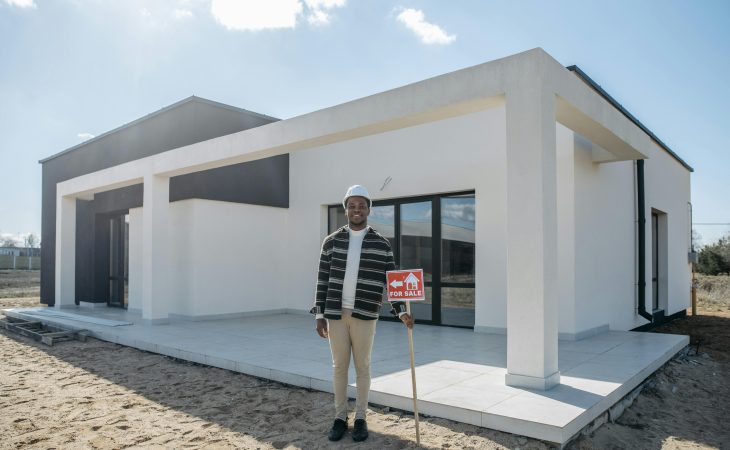
Buying a Home in South Africa is a dream for many aspiring homeowners, but understanding the full financial picture is critical. With the current prime interest rate sitting at 10.75%, and banks offering home loans with varied terms, it’s more important than ever to break down the actual cost of owning a property in this price range. This comprehensive guide offers clarity on monthly repayments, qualifying income, hidden fees, and key homeowner responsibilities.
At an interest rate of 10.75% over a 20-year loan term (with no deposit), a home loan of R1,000,000 would require a monthly repayment of approximately R10,159.67.
Loan Calculation Summary:
To qualify for this loan, lenders generally require your gross monthly income to be at least 3.3 times the monthly repayment. That means you would need a minimum gross monthly income of about R33,526.91.
This can vary depending on your existing debts and financial profile, but it’s a good starting estimate for qualification.
Owning a home comes with more than just bond repayments. Below are important fees and ongoing costs that come with a R1,000,000 home in South Africa:
A once-off fee charged by your lender, typically around R6,037 (capped by law). This can be added to your bond or paid upfront.
Banks typically charge a monthly service fee of R69, added to your bond repayment.
Municipal rates vary based on location and property value. For a home valued at R1,000,000, expect to pay R500–R1,500 per month depending on your municipality.
If you’re buying in a complex or estate, you may need to pay levies, ranging from R800 to R2,500 per month.
Banks require that your property is insured against fire, natural disasters, and more. This typically costs around R200–R500 per month.
Some banks require borrowers to have life cover to secure the loan. Expect costs from R150 – R1500 per month, depending on age and health.
Monthly utility bills can range between R800 and R2,500, based on consumption and municipal pricing.
Depending on the area, you may want private security services, which range between R300 and R1,200 per month.
A general rule is to budget 1–2% of your home’s value per year for maintenance. That’s about R10,000 to R20,000 annually, or R833 to R1,666 monthly.
Item Estimated Monthly Cost
This estimate highlights the importance of not focusing solely on the bond repayment when considering buying a home in South Africa.
Buying a home in South Africa requires careful budgeting and financial planning. While the bond repayment is a significant portion, other fees—like levies, insurance, and municipal rates—can significantly increase your monthly outlay. By understanding the full cost breakdown, qualifying criteria, and available options, you’ll be better equipped to navigate the journey to homeownership successfully.
Buying a home in South Africa for R1,000,000 isn’t just about affording the price tag—it’s about preparing for all the responsibilities that come with it. Make informed decisions, consult experts, and ensure you’re truly ready for this major investment.

Find verified landlords and properties in South Africa on our private property advertising website for verified landlords and agents. Protecting tenant rights with secure property management solutions.
Leave Your Comment